
Cavitox is a modular system that scales
easily,
and boosts wastewater treatment efficiency with tailored setups.
From small labs
to full-scale industrial
wastewater plants
Cavitox can be customized for each water treatment process.


Advanced Oxidation Process (AOP)
It is widely applied to industrial and pharmaceutical wastewater, and substances such as PFAS.
Representative AOP Methods
organic removal efficiency.
generating hydrogen peroxide.
due to limited light absorption.
highly reactive OH radicals.
High initial and operating costs
Limited pollutant coverage
Residual compounds in water
Pre-treatment required
FUST Lab’s AOP CAVITOX
An Innovative AOP System Based on Focused Ultrasonic Technology
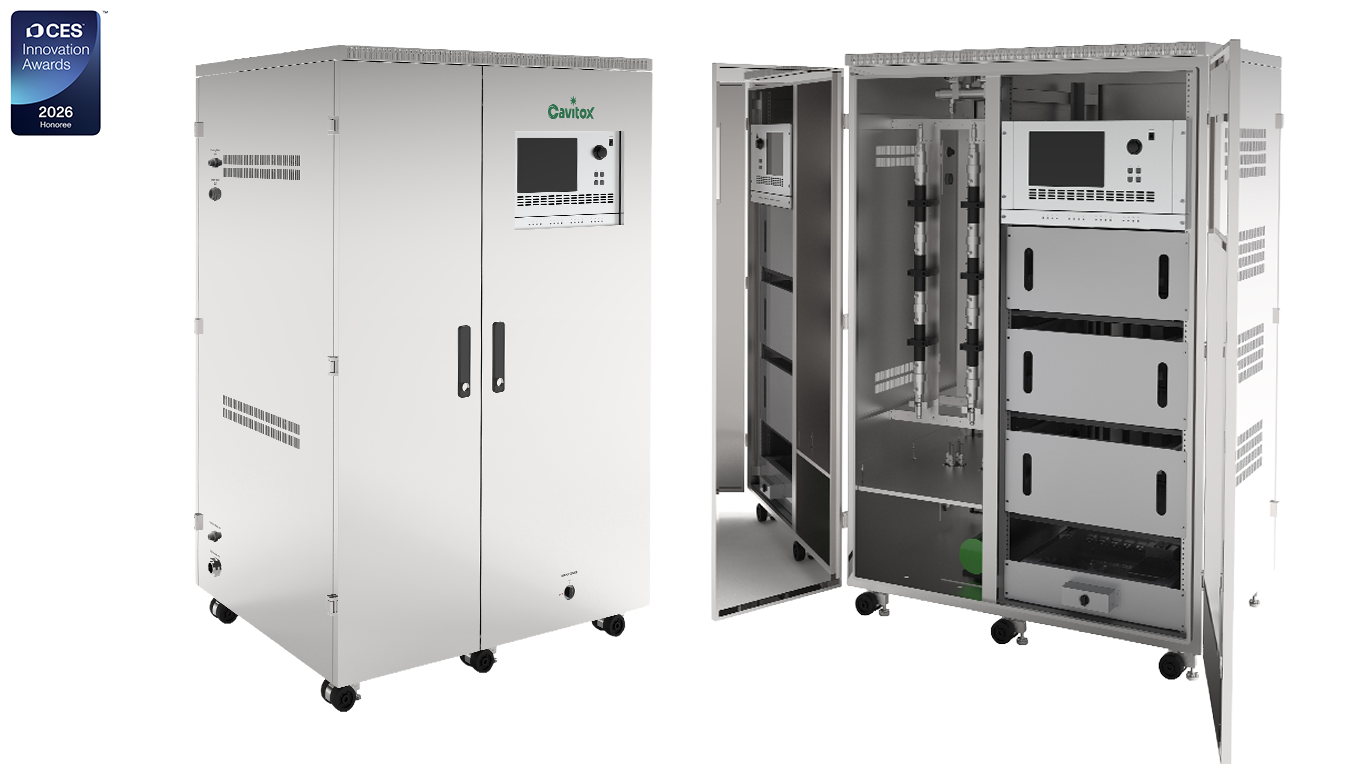
CAVITOX is a next-generation, eco-friendly wastewater treatment technology that overcomes the limitations of conventional Advanced Oxidation Processes (AOP). It effectively removes refractory organic pollutants without additional chemical additives, offering a solution that combines high energy efficiency and cost-effectiveness.
Powerful Oxidation Capability
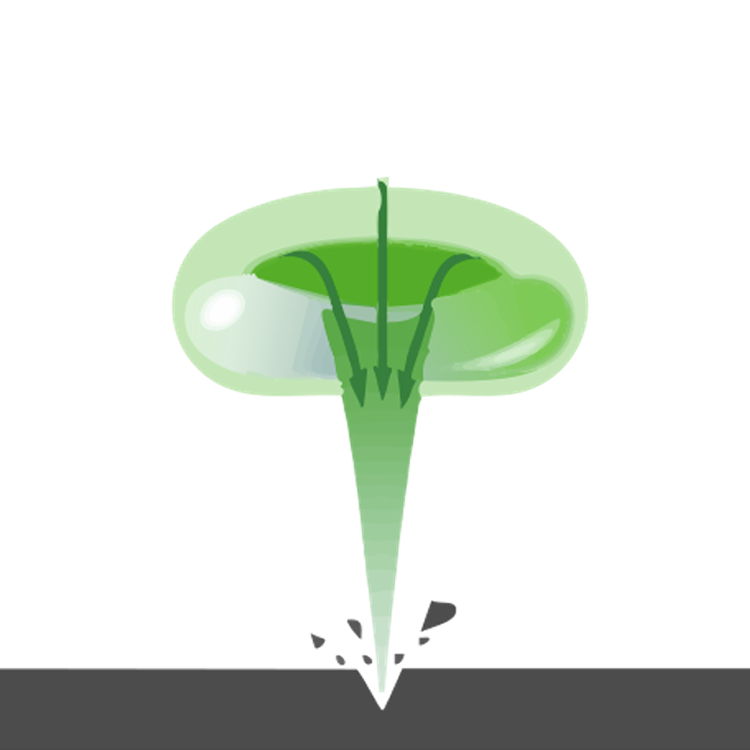
OH radicals generated through ultrasonic cavitation powerfully oxidize and decompose even highly toxic pollutants.
Cost Reduction
Treatment is possible without additional oxidants, significantly reducing operating and maintenance costs while enhancing economic viability.
Efficient Removal
Even refractory organic matter is removed rapidly and reliably, enabling highly efficient and stable water treatment.
Eco-Friendly Technology
A next-generation, environmentally friendly wastewater treatment technology that overcomes the limitations of conventional Advanced Oxidation Processes (AOP).
CAVITOX Water Treatment Process
It minimizes chemical use while delivering high purification efficiency and lower maintenance costs.
The system integrates with existing processes and scales across a wide range of applications.
When ultrasound is applied to a liquid, pressure changes create microbubbles that grow and collapse, instantly generating high-pressure, high-temperature radicals.



CAVITOX
| Basic Specification | ||
|---|---|---|
| Dimensions & Weight | Focused Ultrasonic Processor_FSW16 – 1SET | - 1360mm(W) × 910mm(D) × 1815mm(H), 350kg (W includes 140 mm Wastewater Inlet Pipe / Main body width 1,200 mm) |
| Performance Specification | ||
| Control & Interface | 10.1” Touch LCD integrated control panel | |
| Generator & Pump fully controllable and monitored from the touch screen | ||
| Real-time Flow Rate displayed and logged on the touch screen | ||
| Power Specifications | Input Voltage | AC200V ~ 240V, 50/60Hz |
| Power Consumption | Max 3.5kW | |
| Current | Max 16A | |
| Power Type | Single-phase | |
| Operating Frequency | 350kHz ~ 420kHz | |
| Output Power | MAX 100W(30W ~ 100W) | |
| Pump | Max Flow Rate | 60L/min(50Hz), 65L/min(60Hz) |
| Max Head | 5.4m(50Hz), 7.8m(60Hz) | |
| Power Supply | Factory-set to customer specification (AC200 V or AC220-240 V, 50/60 Hz) |
|
| Wetted Materials | CFRETFE/SIC/FKM or EPDM | |
| Connection | ㆍ Waste water Inlet: Hose I.D(32 mm (1¼”)) ㆍ Treated water Outlet: Hose I.D(13 mm (½”)) |
|
| Cooling System | External Cooling Circulator Required, see specifications | |
| Cooling Circulator(Minimum Required Specification) | ||
| Cooling Capacity, Max | 2.8Kw(20°C), 2.0kW(10°C), 1.6kW(5°C) | |
| Temperature Range | 0°C ~ 40°C(Resolution: ±1°C) CAVITOX Operating Temperature Range: 15°C ~ 20°C |
|
| Pump Bath Volume | 35L | |
| Bath Fluid | Water(DI water recommended) | |
| Pump Flow Rate | Max 32.0 L/min | |
| Pump Pressure | Max 6.0 psi | |
| ※ NOTE: The Cooling Circulator must be prepared separately by the Customer | ||
| Environmental Conditions | ||
| Operating Temperature/Humidity | 10°C ~ 30°C / 30% ~ 60% RH | |
| Storage Temperature/Humidity | 0°C ~ 60°C / 10% ~ 90% RH | |
